


LIMEX HELPDESK
Contact LIMEX for free advice:

Need FREE advice?
Talk to the LimeX team

Fri 16 October 2026

Running his own farm and arable contracting business, Peter Knight farms around 2,500 acres across 30 miles and sits on the NFU National Crops Board.
“Soil pH is always an issue. I don't think it matters much where you farm. Unless you're over chalk, you're going to have a pH issue to a greater or lesser degree,” says Peter.
“It's fairly pointless spending money on nitrogen, phosphate and potash if your pH is way out. It's got to be about soil health and balance. We all know that if your soils get totally askew, either very high pH or very low pH, you're going to end up locking up other elements. So, you have to try to keep a balance.
“The soils we farm here, down in the south, are on weald clay. We've got a bit of green sand in between, and then we go up onto some chalk on the North Downs. Obviously, the downlands are not a problem, but all the rest of the soils that we farm, we end up liming probably once every four or five years.”
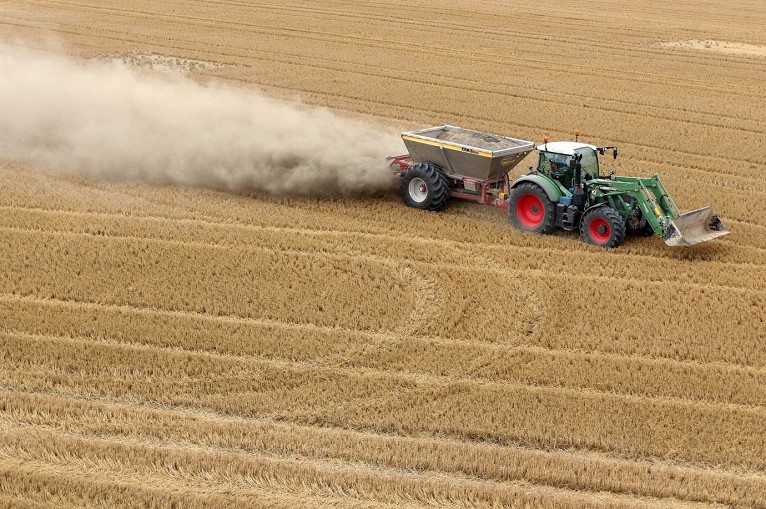
As part of an arable rotation, Peter applies his lime in the autumn, with his first LimeX application in 2025; he is keen to see the first impact this summer.
“Traditionally, we've used Thames Water's Bio solids lime cake, and that's what we've used ever since I've been here. There was a period when we used lime-treated biosludge, which gave us a fair amount of lime. However, that's disappeared, so we can't get that anymore, so we've been looking at alternatives”.
There are many benefits to using LimeX, as each tonne contains 9 kg of phosphate, 8 kg of magnesium, and 7 kg of sulphur.
“LimeX features an extremely small particle size, enabling quick correction of soil pH. This is especially crucial for grassland application, as the product must be fine enough to penetrate through the growing crop and reach the soil without needing cultivation assistance,” explains Glenn Carlisle, Business Manager at LimeX.
As a farmer, Peter has found LimeX to offer great value and quality when compared to previous products.
“It's what you're getting for free in LimeX. Historically, we've used ground chalk, and although that works as a liming product, the quality can be a bit variable depending on how well it's been crushed. LimeX, I found that what we used last autumn was of really good quality. You're getting phosphate for nothing, magnesium for nothing, a bit of sulphur for nothing. There's a lot in there beyond the neutralising value, and that's what swayed me towards LimeX,” says Peter.
Furthermore, Peter has recognised the benefits of applying LimeX on grassland, adding trace elements, phosphate and magnesium to the soil.
“The grassland that we've used it on is basically permanent pasture, not part of an arable rotation, being used to cut for hay for horses, haylage and hay, and therefore, it's just ground that needed a bit of lime to get it back in sensible shape.”
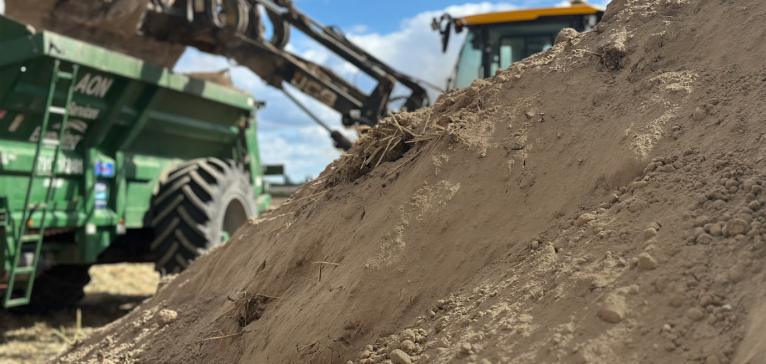
When sourcing LimeX, Peter says he has no problems with delivery, even though he is located outside the usual sugar beet-growing areas.
“We just rang up, ordered the lorry loads that we wanted, and it was tipped in the field because it was dry enough to get out in the field. No problems at all,” he says.
Looking ahead, Peter plans to continue using LimeX.
“We will be using a bit this spring, and we've got some land that will be going into fodder beet, which needs some lime. So yes, we'll be using LimeX.”
LimeX is a division of British Sugar PLC
Website by Tin Fish Creative

British Sugar plc
Registered in England
No. 315158 at Weston Centre
10 Grosvenor Street
London W1K 4QY