


LIMEX HELPDESK
Contact LIMEX for free advice:

Need FREE advice?
Talk to the LimeX team

Fri 16 October 2026

Farming is constantly facing unpredictable challenges, from weather to policy changes, which can impact yields. However, soil acidity is a more manageable factor that, when controlled, supports healthy crop and root development, ultimately leading to higher yields.
Dr Paul Newell-Price at ADAS leads soil research and offers guidance for on-farm decision-making.f
Working on projects such as the review and revision of the Nutrient Management Guide and development of nutrient management software tools in collaboration with DEFRA and AHDB, Dr Newell Price understands the vital role soil health plays in crop viability.
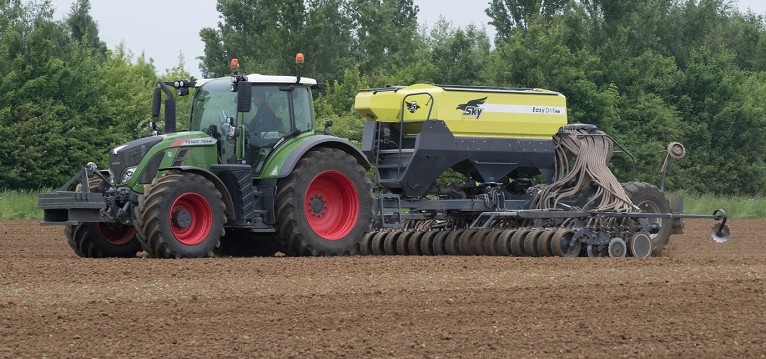
"Soil pH measures the acidity of the soil, which underpins the availability of a wide range of nutrients" says Dr Newell Price.
“As the soil becomes acidic, the major nutrients that the crops and the grass need become less available, and potentially toxic elements and aluminium ions become more available. So, it interferes with the uptake of nutrients the crops need to grow.”
Although the optimum pH can vary slightly depending on soil and crop type, the ideal pH for grassland systems is around 6.5.
“Different crops have their own critical pH below which the yields are impacted quite significantly. Grass species can generally cope with more acidic soil than clover, for example, and some other legumes like sainfoin and bird’s-foot trefoil prefer a higher pH,” says Dr Newell-Price.
“Having an acidic soil interferes with nutrient availability, and most of the major nutrients are most available at that six to seven pH range, neutral to slightly acidic.
What does the current grassland pH landscape look like?
With changing weather conditions, continuing heavy rainfall and generally wetter winters, soil pH continues to be affected over time, and Dr Newell Price explains that it is most noticeable on soils with naturally low pH.
“We have some calcareous soils, the soils on chalk and limestone, which are quite naturally high pH, and they tend to retain that high pH over time pretty well. But all other soils and naturally acidic ones tend to lose lime and calcium readily through rainfall and the use of manures and fertilisers.
“The pH level will drop over time if you don't lime. We know from survey work that's been done and the values that are reported by the labs that receive the soil samples that we have a range of pHs across the country, and we do have quite a significant proportion that are below optimum and below 5.5, which is when you start to see real impacts in terms of grass yield.”
“So, within productive, improved grassland systems, especially if you're using manufactured nitrogen fertiliser, then it's really important to get the pH right”.
How does low soil pH impact grass yields?
Not only does low soil pH affect nutrient availability and uptake, but it can also impact other areas of plant growth.
“It also affects the soil structure. So, your actual soil structure is not optimal. Your soil isn't well aerated, so roots can't spread as far into it, and so it could affect the root architecture and root proliferation,” says Dr Newell-Price.
“You also get a decline in sward quality in terms of species composition. So, you might get more weed species coming in because the pH isn't right for those productive species you want maintain in the sward.”
How can you increase soil pH?
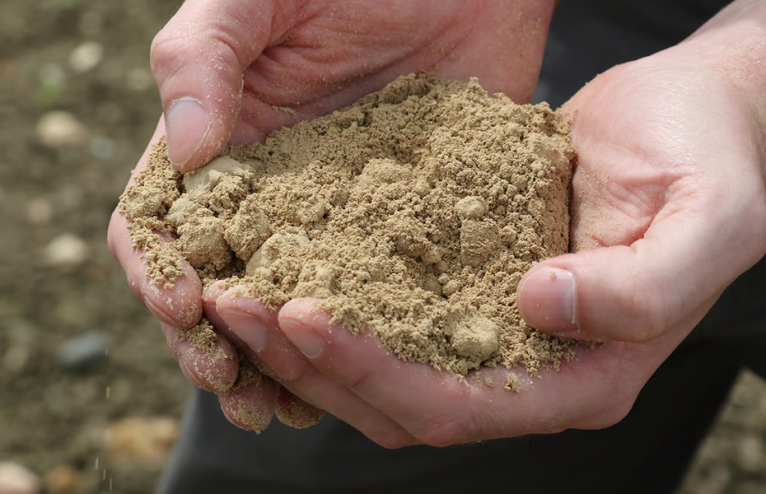
To raise the soil pH and decrease acidity, an alkaline substance can be added to achieve a neutral pH; this is typically present in liming products.
When it comes to choosing which liming products to use and when to lime, Dr Newell-Price suggests there are two approaches: every four/five years or little and often.
“There are different liming products. You have options like ground limestone, magnesium limestone or chalk, which can be spread efficiently using a twin-disc spreader by a contractor. These are typically applied in bulk and offer good neutralising value and effective liming.
“Or, you can get a prilled product which you can spread out of a fertiliser spreader that will be more costly in terms of the product price”.
LimeX is among the former and offers strong neutralising properties and overall intrinsic value.
“LimeX is a calcium carbonate-based liming product. The carbonate reacts with the acidic hydrogen ions in the soil to make neutral carbon dioxide and water, and what’s left is an abundance of calcium. So, by applying LimeX, you’ve replaced the acidity in your soil with calcium, which is an essential macro nutrient for all plants and also plays an important role in improving soil structure, aeration and drainage,” says LimeX Business Manager, Glenn Carlisle.
What are the benefits of using LimeX?
LimeX contains four essential nutrients, calcium, phosphate, magnesium and sulphur, and helps correct soil pH.
However, its most distinctive feature is its very fine particle size, which allows it to raise pH quickly while delivering long-lasting effects.
Glenn Carlisle, explains the advantage of smaller particles.
“LimeX has a very, very fine particle size, meaning that when you apply it to your soil, the pH rises very rapidly and the calcium is much more available than other coarser liming products on the market,” says Glenn.
“LimeX also has an additional nutrient benefit: 9 kg of phosphate, 8 kg of magnesium, and 7 kg of sulphur in every tonne.
“At a normal application rate of 5.0 to 10 tonnes per hectare, depending on the starting pH of your soil, this is a good dose of phosphate that you won't need to pay for out of a bag.”
LimeX is a division of British Sugar PLC
Website by Tin Fish Creative

British Sugar plc
Registered in England
No. 315158 at Weston Centre
10 Grosvenor Street
London W1K 4QY